Sunday, 30 March 2014

Zebra Profile,News,Photos

Zebra


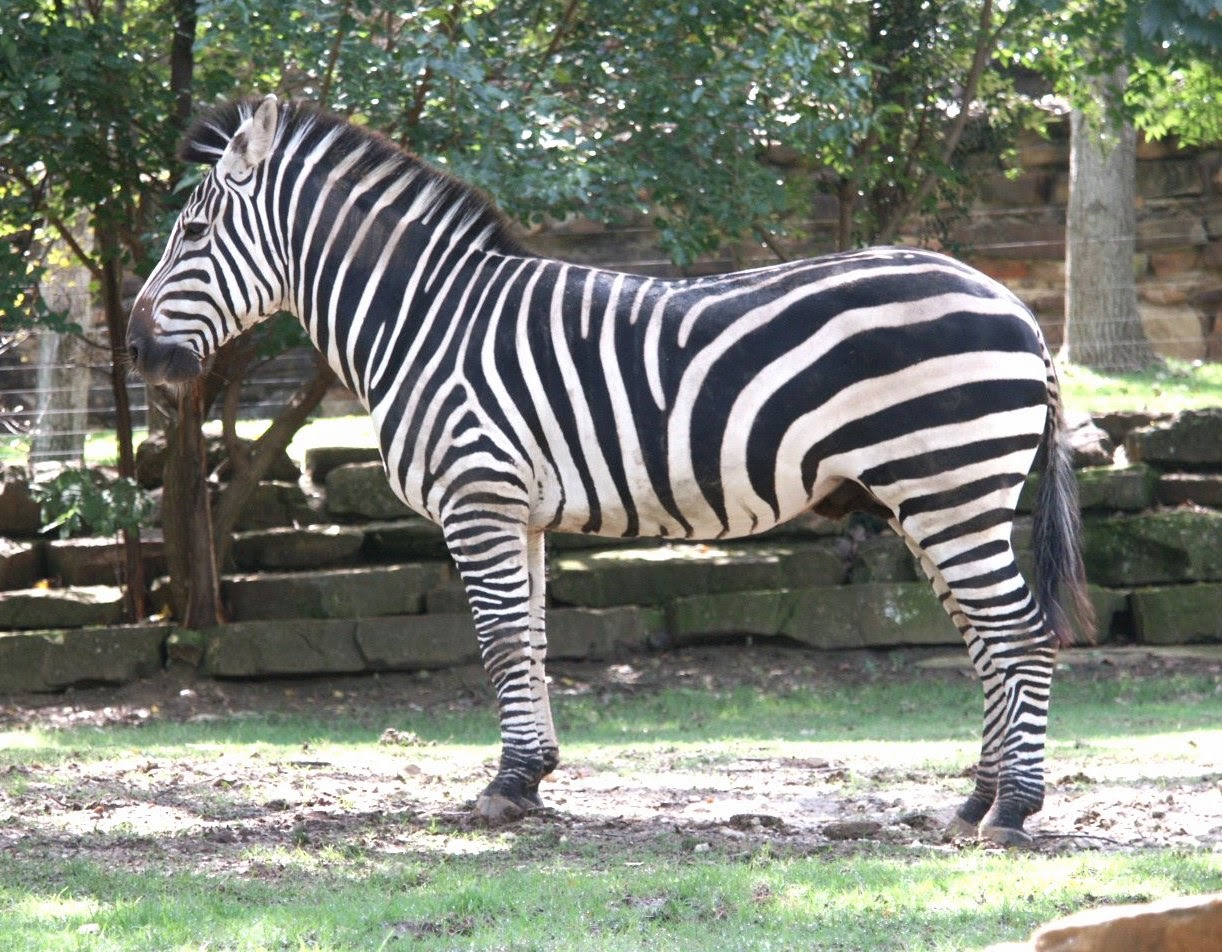
Zebras are several species of African equids(horse family) united by their distinctive black and white stripes. Their stripes come in different patterns, unique to each individual. They are generally social animals that live in small harems to large. Unlike their closest relatives, horses and donkeys, zebras have never been truly domesticated.
There are three species of zebras: the  plain Zebra, the and the mountain zebra. The plains zebra and the mountain zebra belong to the subgenus Hippotigris, but Grévy's zebra is the sole species of subgenus Dolichohippus. The latter resembles an ass, to which it is closely related, while the former two are more horse-like. All three belong to the genus Equus, along with other living equid. 

Kingdom:
Phylum:
Class:
Order:
Family:
Genus:
Subgenus:
Hippotigris and
Dolichohippus


Classification


There are three Collectively, two of the species have eight subspecies(seven extant). Zebra populations are diverse, and the relationships between, and the taxonomic
 status of, several of the subspecies are not well known 


Size and weight

The common plains zebra is about 50–52 inches (12.2–13 hands, 1.3 m) at the shoulder with a body ranging from 6–8.5 feet (2–2.6 m) long with an 18-inch (0.5 m) tail. It can weigh up to 770 pounds (350 kg), males being slightly bigger than females.  Grevy zebra is considerably larger, while the mountain zebra is somewhat smaller.
                                                                                  Zebra 

Reproduction

Female zebras mature earlier than the males, and a mare may have her first foal by the age of three. Males are not able to breed until the age of five or six. Mares may give birth to one foal every twelve months. She nurses the foal for up to a year. Like horses, zebras are able to stand, walk and suckle shortly after they are born. A zebra foal is brown and white instead of black and white at birth.
                                                               Zebra
                                                                Zebra


Friday, 28 March 2014

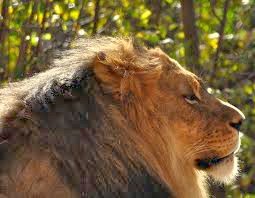
Babbar Sher (Lion) Profile,news,photos


Babbar


Babbar may refer to

People with name Babbar:

  • there are various myth about babbar sher in zoological terms babbar sher are dominating male in lion clan.


Thursday, 27 March 2014

Tiger Photos,News about

Tiger Facts

TIGERS


Common Name: Tiger
Kingdom
: Animal
Phylum: Chordata (Vertebrata)
Class: Mammalia
Order: Carnivora
Family: Felidae
Genus: Panthein Panther
Species: Tigris
Sub-species:
Bengal Tiger – Panther Tigris Tigris 1200-1500 left
Siberian (Amurian) Tiger – Panther Tigris Altaica 331 left
Sumatran Tiger – Panther Tigris Sumatrae 136 left
Indo-Chinese Tiger – Panther Tigris corbetti
Malayan Tiger – Panther Tigris jacksoni **
South China Tiger – Panthera Tigris Amoyensis 37 left
Javan Tiger – Panther Tigris sondaica – extinct since early 1980′s
Bali Tiger – Panther Tigris Balica – extinct since the 1940′s
Caspian Tiger – Panther Tigris virgata – formerly thought to be extinct since the early 1970′s.


Size and Appearance: The largest of all the living cats, the tiger is immediately recognizable by its unique reddish – orange coat with black stripes. Stripe patterns differ among individuals and are as unique to the animal as are fingerprints to humans. The dark lines above the eyes tend to be symmetrical, but the marks on the sides of the face and body can be different.  Males have a prominent ruff or collar, which is especially pronounced in the Sumatran tiger.

One single white cub was found in the wild and taken by a hunter who killed his mother and normal colored siblings. He was named Mohan and is the progenitor of most white tigers now in captivity. White tigers would never survive in the wild as the white coat is only produced through severe inbreeding. White tigers have brown stripes and crystal blue eyes, and some specimens in captivity have no stripes at all.

 Hunting and Diet: Tigers hunt primarily between dusk and dawn, and they attack using the same method as do the lions. They stalk, chase, and attack, bringing down and killing the prey with usually a bite to the nape of the neck or the throat. The bite to the throat allows the tiger the ability to suffocate the prey bringing death 


Horse ,Profile,News,Photos


Horse

Domesticated
Scientific classification
Kingdom:Animalia
Phylum:Chordata
Class:Mammalia
Order:Perissodactyla
Family:Equidae
Genus:Equus
Species:E. ferus
Subspecies:E. f. caballus
Trinomial name
Equus ferus caballus

Horse


The horse is one of two extant subspecies of Equus ferus. It is an odd-toed ungulate mammal belonging to the taxonomic family Equidae. The horse has evolved over the past 45 to 55 million years from a small multi-toed creature into the large, single-toed animal of today. Humans began todomesticate horses around 4000 BC, and their domestication is believed to have been widespread by 3000 BC. Horses in the subspecies caballus are domesticated, although some domesticated populations live in the wild as feral horses. These feral populations are not true wild horses, as this term is used to describe horses that have never been domesticated, such as the endangered przewalski's horse, a separate subspecies, and the only remaining true wild horse. There is an extensive, specialized vocabulary used to describe equine-related concepts, covering everything from anatomy to life stages, size, colors,markings, breeds, locomotion.


Size and measurement

The height of horses is measured at the highest point of the withers, where the neck meets the back. This point is used because it is a stable point of the anatomy, unlike the head or neck, which move up and down in relation to the body of the horse.
The English-speaking world measures the height of horses in hands and inches: one hand is equal to 4 inches (101.6 mm). The height is expressed as the number of full hands, followed by a point, then the number of additional inches, and ending with the abbreviation "h" or "hh" (for "hands high"). Thus, a horse described as "15.2 h" is 15 hands plus 2 inches, for a total of 62 inches (157.5 cm) in height.

Behavior

Horses are prey animals with a strong fight-or-flight response. Their first reaction to threat is to startle and usually flee, although they will stand their ground and defend themselves when flight is impossible or if their young are threatened. They also tend to be curious; when startled, they will often hesitate an instant to ascertain the cause of their fright, and may not always flee from something that they perceive as non-threatening. Most light horse riding breeds were developed for speed, agility, alertness and endurance; natural qualities that extend from their wild ancestors. However, through selective breeding, some breeds of horses are quite docile
                                                              horse   
                                                               horse
                                                                 horse
                                                                 horse       
                                                              horse     
                                                                horse

Tuesday, 25 March 2014

Water Buffalo Photos,News,kinds of Buffalos

 Water buffalo


Water buffaloes are especially suitable for tilling nice fields, and their milk is richer inport fat and ein than that of the dairy Cow. The large feral population of northern Australia became established in the late 19th century, and there are smaller feral herds in New Guinea, Tunisia and northeastern Argentina.There are at least 130 million domestic water buffalo, and more human beings depend on them than on any other domestic animal.


Domestication and breeding


Water buffaloes were domesticated in India about 5000 years ago, and in China about 4000 years ago. Two types are recognized, based on morphological and behavioural criteria – the river buffalo of the Indian subcontinent and further west to the Balkans and Italy, and the swamp buffalo, found from Assam in the west through Southeast Asia to the Yangtze valley of China in the east. The present day river buffalo is the result of complex domestication processes involving more than one maternal lineage and a significant maternal gene flow from wild populations after the initial domestication events. There are 22 breeds of the river type water buffalo known including Murrah,Nili-Ravi, Surti, Jafarabadi, Anatolian, Mediterranean and Egyptian buffalo.China has a huge variety of buffalo genetic resources, comprising 16 local swamp buffalo breeds in various regions.

In Asia


More than 95.8% of the world population of water buffaloes can be found in Asia including both river and swamp types. The water buffalo population in India numbered over 97.9 million head in 2003 representing 56.5 % of the world population. They are primarily of the river type with 10 well-defined breeds comprising Badhawari, Murrah, Nili-Ravi, Jafarabadi, Marathwada, Mehsana, Nagpuri, Pandharpuri, Toda and Surti. Swamp buffaloes occur only in small areas in the north-eastern part and are not distinguished into breeds


In Australia

Between 1824 and 1849, water buffalos were introduced into the Northern Territory fromTimor, Kisar and probably other islands in the Indonesian archipelago. In 1886, a few milking types were brought from India to Darwin. They have been the main grazing animals on the sub-coastal plains and river basins between Darwin and Arnhem Landsince the 1880s. In the early 1960s, an estimated population of 150,000 to 200,000 buffalos were living in the plains and nearby areas


In South America


Water buffalo were introduced into the Amazon River basin in 1895. They are now extensively used there for meat and dairy production. In 2005, the buffalo herd in the Brazilian Amazon stood at approximately 1.6 million head, of which approximately 460,000 were located in the lower Amazon floodplain. Breeds used include Mediterranean from Italy, Murrah and Jafarabadi from India, and Carabao from the Philippines